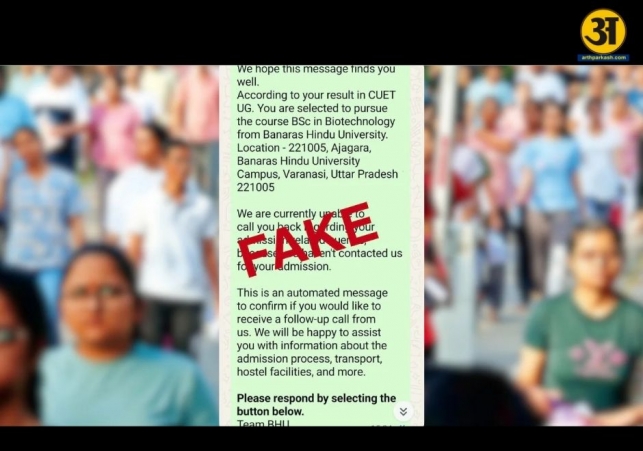
BHU warns students over fake admission messages
BHU cautions students about fake WhatsApp admission messages, issues official notice
Banaras Hindu University (BHU) has warned students and admission seekers about fake WhatsApp messages that falsely promise admission chances. The university says these messages often include unknown links or short URLs that can trick people into sharing personal data or paying money. BHU has officially stated it does not send admission confirmations or offers through WhatsApp or other instant messaging platforms. Instead, all genuine admission information is sent only by email and posted inside each candidate’s student portal. The university named the two official email addresses used for admission communication: [email protected] and [email protected]. If a message comes from any other email ID, students should treat it as suspicious and ignore or delete it. The notice also explains that fraudsters may use urgent language, random capital letters, or promises of “guaranteed seats” to pressure students into clicking links. These tricks are common methods used by scammers to create fear or excitement. BHU has “taken cognizance,” meaning it has formally noted the problem and is acting to protect students. It stresses that applicants must rely only on the official BHU website (bhu.ac.in) for admission updates, counselling schedules, document verification dates, and fee payment windows. The university says it will not accept liability for losses if someone responds to fake messages. Students are therefore personally responsible for checking correct channels. The notice urges every candidate to log into the admission portal regularly rather than waiting passively for alerts forwarded by friends or social media groups. It reminds them that real updates are already visible there once published. BHU also points out that scammers sometimes clone logos or create near‑copy web addresses to appear genuine. A small spelling change or extra character in a link can signal a fake site. Students should type the official web address directly into their browser instead of tapping on forwarded links. Opening unverified links can lead to malware installation, theft of login credentials, or requests for illegal “processing” fees. The university repeats that it never demands unexpected payments through digital wallets, random bank accounts, or quick response (QR) codes outside the structured online payment process displayed inside the secure portal. Any demand like that should be reported immediately.
ALSO READ: From paper to practice: Making workplaces truly safe for women
ALSO READ: Why speedy justice is no longer a luxury but a right in India
How students can stay safe
To stay safe, BHU advises students to follow simple steps:
(1) Trust only the two listed official email IDs.
(2) Visit the official admission page by typing bhu.ac.in manually.
(3) Check the student portal daily during active admission phases.
(4) Do not click links received through WhatsApp, Telegram, SMS, or unofficial social media groups.
(5) Do not share application numbers, passwords, one‑time passwords (OTPs), or identity documents with unknown people offering “help.”
(6) Cross‑verify any doubtful message by composing a new email (not replying to the suspicious one) to the official addresses.
(7) Keep antivirus software updated on the device used for admission work.
(8) Log out from shared computers after checking the portal.
(9) Maintain a personal record of official emails received, including timestamps, for future reference.
(10) Report any suspicious approach to BHU immediately, including screenshots.
The notice highlights that scammers target moments of anxiety, such as just before merit lists, counselling rounds, or seat freeze deadlines. Students should pause, re‑read, and verify before acting. If a message claims “last chance,” they should still confirm through the portal first. The university further emphasises that genuine seat offers or document deficiency notices will appear inside the candidate’s account. Students should also warn peers who might be less aware of cyber safety. Simple peer education reduces the pool of easy targets. Parents should be informed too, since some scammers call parents directly pretending to “fast track” admission. BHU’s clear message is that patience, routine checking, and strict reliance on official channels will prevent almost every fraud attempt. By staying alert and disciplined now, students can protect their academic future and finances and avoid stress caused by preventable scams. The university concludes that vigilance is a shared responsibility and that informed students are the strongest defence against fraud.
Related News